Discussions
How can 3D Depth Mapping and Immersive Visuals improve Academic Assignment comprehension for complex subjects?
As an educator focusing on student success in Australia, I’ve noticed that traditional text-heavy assignments are becoming less effective for Gen-Z learners. With the rise of tools like Immersity AI, there is a massive opportunity to use spatial intelligence to help students visualize complex engineering, medical, or design concepts.
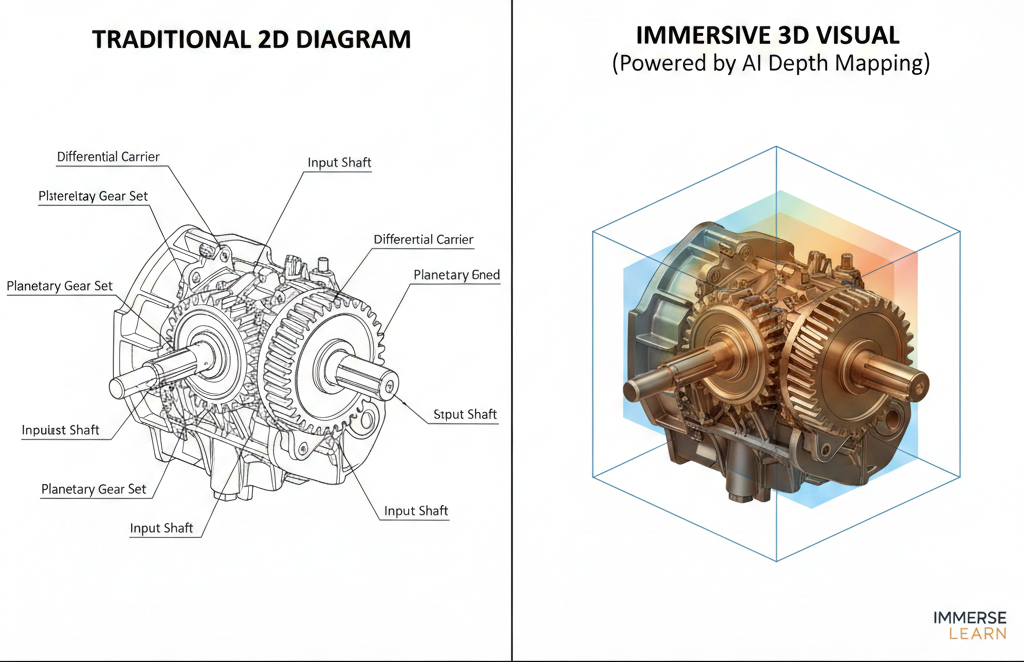
Many students struggle not because they lack knowledge, but because they can’t visualize the data they are working with. For instance, converting a 2D diagram of a mechanical part into a 3D depth-mapped animation can bridge the gap between theory and practical understanding. This is especially relevant in the Australian higher education landscape, where interactive and multimedia-based assessments are becoming the new standard.
When students reach out for assignment help services, our goal isn't just to provide answers, but to offer a holistic support system that includes visual aids and structural guidance. By integrating 3D conversion technology into academic tasks, we can help Australian students present their work with higher clarity and technical sophistication.
I am curious to hear from the community: Have any developers here used the Immersity API to build educational modules specifically for student project support? How do you ensure the depth maps remain accurate enough for academic-grade technical illustrations?